Lead poisoning is a largely invisible but serious threat to public health and the environment. Unlike many environmental hazards, lead exposure cannot be identified by sight, smell or taste. Yet its effects can be severe, particularly among children, whose developing brains and nervous systems are especially vulnerable. Exposure can result in reduced intelligence, learning difficulties, behavioural problems and lasting neurological damage. In adults, it can contribute to cardiovascular disease, kidney damage and reproductive health problems.
Despite the seriousness of these effects, lead exposure often goes undetected until harm has already occurred. Preventing exposure at its source is therefore essential.
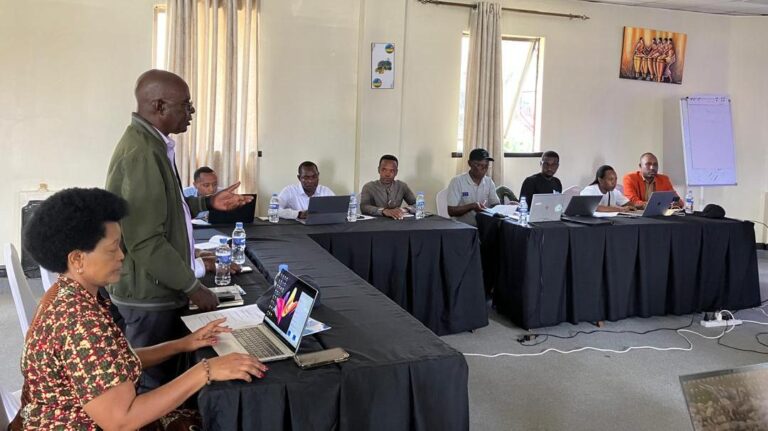
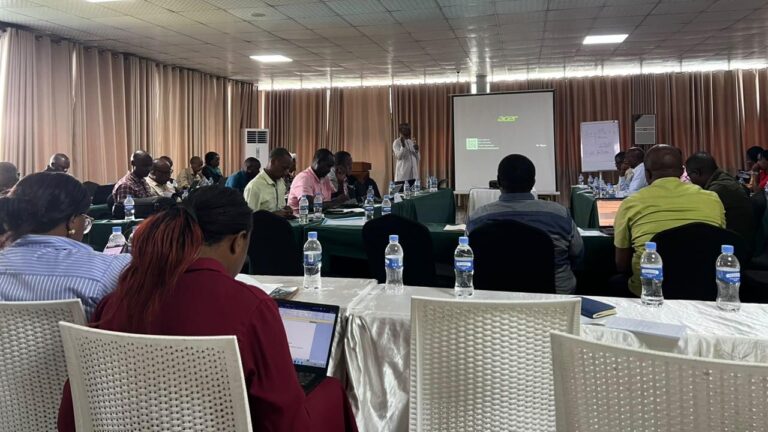
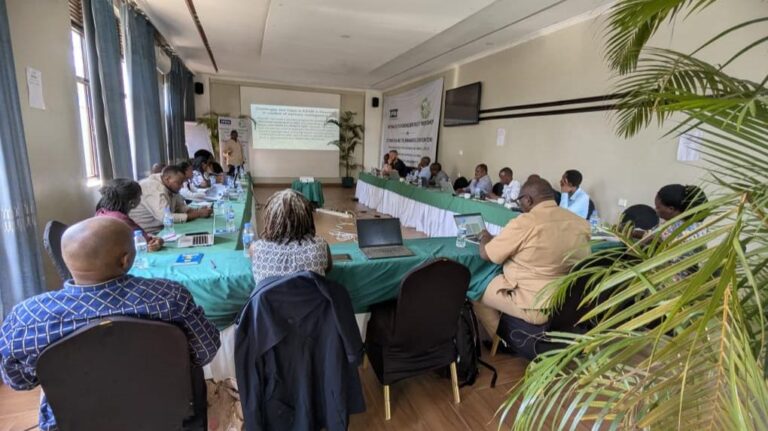
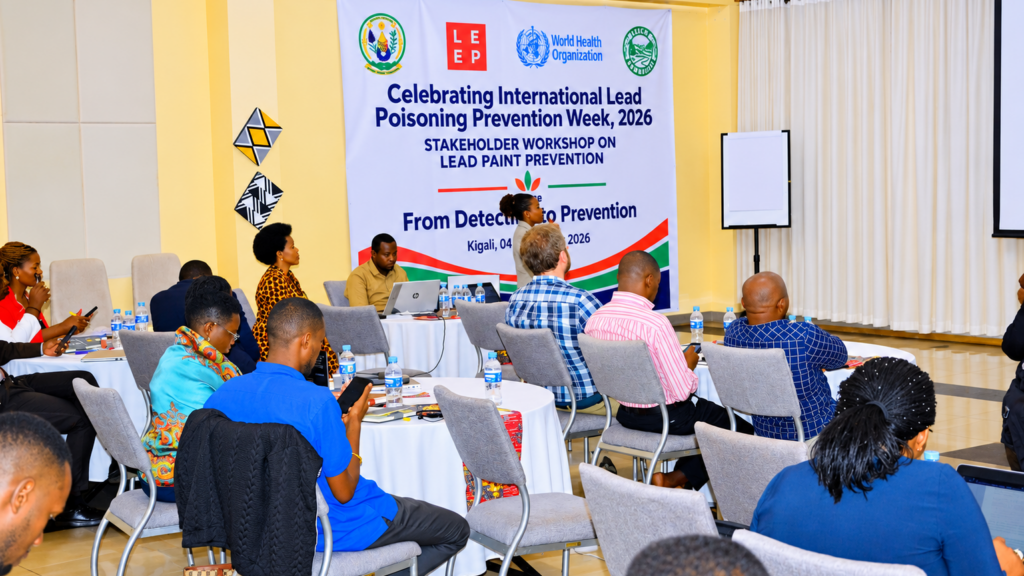
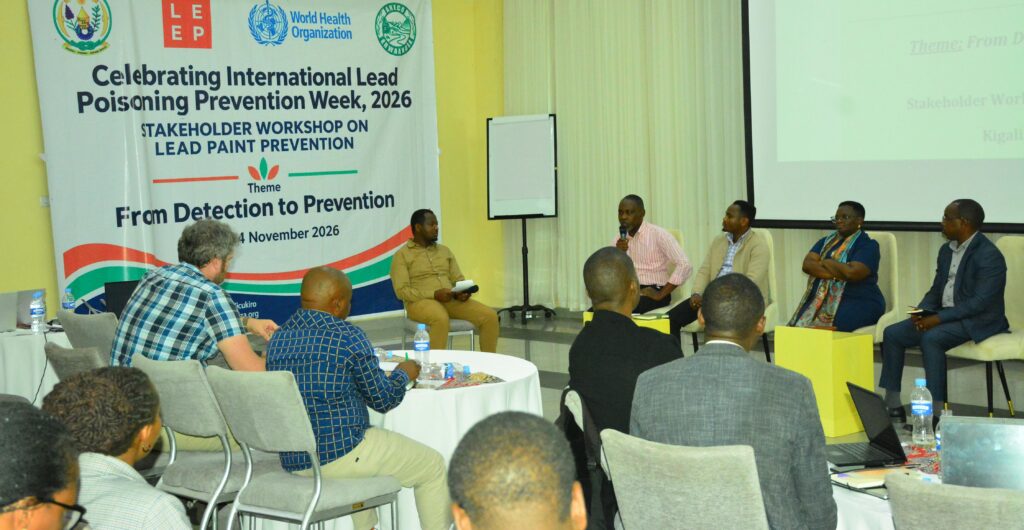
In Rwanda, the need for stronger prevention measures was at the centre of a stakeholder workshop convened by the Association Rwandaise des Ecologistes (ARECO-RWANDA NZIZA), with financial and technical support from the Lead Exposure Elimination Project (LEEP), on 4 November 2026 at Sainte Famille Hotel in Kigali. Organized in collaboration with the Ministry of Environment (MoE), Rwanda Environment Management Authority (REMA), Rwanda Standards Board (RSB) and Rwanda Inspectorate, Competition and Consumer Protection Authority (RICA), the workshop formed part of the 2026 International Lead Poisoning Prevention Week (ILPPW).

Under the global theme “From Detection to Prevention,” representatives of government institutions, development partners, academia, civil society, the private sector, paint manufacturers and the media came together to examine the evidence on lead in paint, assess existing regulatory and market-surveillance arrangements, and identify practical measures to accelerate Rwanda’s transition towards lead-free paint.
The discussions highlighted an important message: identifying lead contamination is necessary, but lasting progress depends on preventing its use, strengthening oversight and supporting safer alternatives.
An Invisible Threat to Public Health
Lead is a toxic metal that can affect nearly every system in the human body. Children are particularly susceptible because their bodies absorb lead more readily than adults, and their developing brains and nervous systems are highly sensitive to its effects. Even relatively low levels of exposure can affect cognitive development, attention, learning and behaviour. There is no known safe level of lead in a child’s blood.
Lead can enter the body through ingestion or inhalation. In environments where lead-based paint is present, deteriorating painted surfaces can release contaminated dust and paint chips. Children may swallow this dust through normal hand-to-mouth behaviour, while people undertaking renovation, sanding or demolition may inhale or ingest particles released from old paint.
Lead compounds have historically been added to paint for several technical purposes. They may be used as pigments to produce particular colours, as drying agents to accelerate paint drying, or as anti-corrosive ingredients to protect metal surfaces. Some lead-based pigments have been used to produce bright yellow, red and other colours.
The danger is not limited to the initial application of paint. As painted surfaces age, deteriorate or are disturbed during maintenance and renovation, lead-containing dust and chips can contaminate indoor environments, soil and surrounding areas. Homes, schools, childcare facilities and playgrounds are particularly important settings for prevention because of the potential exposure of young children.
Lead may also be present in other products and environmental materials. Addressing lead in paint is therefore an important part of a broader effort to reduce exposure to toxic substances.
What Research Reveals About Lead in Rwanda
Scientific evidence presented during the workshop underlined the need for stronger controls over lead in paint sold in Rwanda.
A targeted paint assessment conducted in Kigali in November and December 2023 by ARECO-RWANDA NZIZA examined 33 paint samples from 12 major manufacturers. The samples comprised 32 oil-based paints and one water-based paint. Laboratory analysis was conducted at the Occupational Health Laboratory of the University of Wisconsin in the United States.
The findings were concerning. Among the oil-based paint samples tested, 46.9% contained lead concentrations exceeding 90 parts per million (ppm), the maximum allowable concentration used as the benchmark in Rwanda. Furthermore, 28.1% contained lead concentrations above 10,000 ppm. The highest concentration detected was 200,000 ppm, equivalent to more than 2,222 times the 90 ppm benchmark.
The assessment also found that 11 of the 12 manufacturers represented in the sample had at least one product exceeding the 90 ppm threshold.
These findings point to a significant lead-paint challenge in the products examined. However, the assessment was a targeted study of a limited number of samples collected in Kigali. It should not be interpreted as a nationally representative estimate of the proportion of all paint products sold in Rwanda that contain excessive lead.
The significance of the findings lies in demonstrating that paints with very high lead concentrations were available on the local market and that further testing, market surveillance and regulatory action are necessary.
Understanding the 90 ppm benchmark
The 90 parts per million (ppm) benchmark is closely linked to the Lead Safe Paint® Certification Programme, a voluntary, independent third-party certification scheme initiated by the International Pollutants Elimination Network (IPEN). The programme provides a means of identifying paints containing less than 90 ppm of total lead, measured on a dry-weight basis. IPEN owns the certification scheme and its standard, while SCS Global Services serves as the independent certification body, administering the programme and overseeing product testing and certification.
The 90 ppm threshold is also reflected in international policy guidance. RICA’s presentation during the workshop identified the United Nations Environment Programme (UNEP) Model Law as recommending a maximum total lead concentration of 90 ppm (90 mg/kg) in paint. The ARECO presentation also cited the Lead Safe Paint® Standard, with reference to the World Health Organization’s 2023 report.
In Rwanda, the Rwanda Standards Board (RSB) identifies 90 mg/kg as the maximum acceptable limit for total lead content in paint and describes it as the lowest technically feasible and most protective limit currently achievable. The threshold is equivalent to 0.009% of the paint’s dry weight.
It is important to distinguish this product benchmark from a safe level of human exposure. Lead is harmful at all levels of exposure, and there is no known safe level of lead in a child’s blood. The purpose of the 90 ppm threshold is to minimize lead in paint and prevent its intentional use, while recognizing that small traces may sometimes occur naturally in raw materials.
For Rwanda, the challenge is therefore not simply to adopt an internationally recognized benchmark, but to translate it into an effective regulatory framework, strengthen testing and market surveillance, and support manufacturers in moving towards lead-free production.
Beyond Paint: Other Sources of Lead
The RSB presentation also drew attention to lead contamination in other products and materials examined through its broader assessment work. The findings included the detection of lead in 9 out of 10 ceramic samples and all 7 compost samples tested. Lead was also reported in other categories, including plastics and packaging, spices and cosmetics.
These results indicate that the challenge of lead exposure extends beyond paint and deserves attention across different products and environmental pathways. However, the sample numbers for some categories were small. The findings should therefore be understood as evidence of contamination in the samples examined, rather than estimates of the prevalence of lead contamination throughout Rwanda.
Taken together, the available findings reinforce the importance of reliable laboratory testing, stronger product controls and continued research to identify and prevent sources of lead exposure.
Closing the Regulatory Gaps
Rwanda has an existing legal and policy foundation for environmental protection and the management of hazardous substances. The Constitution, National Environment and Climate Change Policy of 2019 and Vision 2050 provide broader direction for environmental sustainability, public health and responsible management of natural resources.
A key instrument is Law No. 48/2018 of 13 August 2018 on Environment, which establishes requirements for environmental protection and the management of activities that may cause environmental harm. Its provisions address pollution prevention, environmental obligations and the control of hazardous substances.
Other relevant instruments include Ministerial Order No. 003/2021 of 10 February 2021, which establishes the list of chemicals and their respective prohibited and restricted uses. The list includes tetraethyl lead and tetramethyl lead. Ministerial Order No. 001/2019 of 15 April 2019 also provides for environmental impact assessment requirements for projects involving paint manufacturing.
These instruments provide an important basis for controlling hazardous substances and preventing environmental pollution. Rwanda has also developed standards relevant to the management of lead and product safety. The RSB presentation highlighted a body of 53 relevant standards, comprising 14 Rwanda Standards (RS), 26 East African Standards (EAS) and 13 International Organization for Standardization (ISO) standards. These include standards relevant to toys and other products that may present exposure risks.
Nevertheless, the existence of standards and general environmental legislation does not, by itself, guarantee effective control of lead in paint. The workshop discussions identified the need to strengthen the specific regulatory framework for lead in paint, including finalizing and gazetting the relevant regulation and ensuring effective implementation.
REMA also emphasized the importance of a practical compliance approach built around five steps: Know, Prevent, Check, Correct and Sanction. This approach underlines the need for regulated businesses to understand their obligations, prevent pollution, verify compliance, address identified problems and face appropriate consequences where requirements are not met.
Moving from policy commitments to effective prevention will require coordinated action, adequate testing capacity, clear regulatory responsibilities and consistent market oversight.
The Challenge of Market Surveillance
Effective regulation depends on the ability to determine whether products on the market comply with established standards. RICA’s presentation highlighted the importance of market surveillance while drawing attention to gaps in testing capacity and the availability of laboratory results.
Across the 2024–2025 and 2025–2026 fiscal years, RICA collected 62 paint samples for surveillance. However, laboratory results were available for only 20 samples. Of these, 19 passed the applicable assessment, while one failed, recording a lead concentration of 20,000 ppm.
The remaining 42 samples, representing approximately 67.7% of the total collected, had no available laboratory results at the time of the presentation. Their compliance status therefore remained unknown.
This is an important distinction: the absence of test results does not establish that the products failed to comply. It does, however, reveal a significant gap in the ability to verify compliance across the collected samples.
The findings demonstrate why market surveillance must be supported by adequate laboratory capacity, timely testing and effective follow-up. Without reliable results, regulators cannot fully establish the extent of non-compliance or determine which products require corrective action.
The workshop also highlighted broader challenges, including difficulties monitoring informal distribution channels, inadequate product labelling and safety information, limited awareness among manufacturers and consumers, and the technical and financial challenges associated with reformulating paint products.
Addressing these issues requires more than occasional inspections. It calls for a systematic approach that combines risk-based sampling, laboratory testing, product traceability, enforcement and cooperation among the responsible institutions.
Safer Alternatives for the Paint Industry
Eliminating lead from paint is technically achievable. The workshop discussions, including the contribution from AMACO Paints, demonstrated that manufacturers can replace lead-containing ingredients with safer alternatives while continuing to produce paints for different applications.
For pigments, lead chromate yellow can be replaced with alternatives such as Hansa Yellow (PY74), Diarylide Yellow (PY83) and Bismuth Vanadate Yellow (PY184). Rutile titanium dioxide (TiO₂) can be used as an alternative to lead-based white pigments. Other organic pigments can also provide suitable colour options, depending on the required product characteristics.
For drying agents, lead-based driers such as lead octoate can be replaced with alternatives based on zirconium, cobalt, manganese, calcium and strontium compounds. The choice of drier depends on the paint formulation and the performance required.
For anti-corrosive applications, red lead can be replaced with zinc phosphate and modified zinc phosphate formulations, calcium silicate, calcium borosilicate and other suitable corrosion-inhibiting technologies.
The availability of these alternatives provides a practical basis for moving towards lead-free production. However, the transition is not without challenges. Manufacturers must ensure that replacement ingredients deliver the required colour, brightness, opacity, hiding power, drying performance and corrosion resistance. Some alternatives, particularly specialized organic pigments, may also involve higher costs or supply constraints.
Reformulation requires technical expertise, laboratory testing, quality control, staff training and adjustments to production processes. Manufacturers must also consider customer expectations, product pricing and the need to maintain consistent product performance.
These challenges should not be viewed as reasons to delay the transition. Rather, they point to the importance of technical assistance, access to reliable suppliers, knowledge exchange and constructive engagement between regulators and industry.
Producing lead-free paint can strengthen consumer confidence, protect workers, reduce environmental contamination and help manufacturers position their products in markets increasingly attentive to chemical safety and environmental performance.
Turning Evidence into Action
The workshop made clear that eliminating lead from paint cannot be achieved by one institution or sector acting alone. It requires a coordinated national response in which government, regulators, manufacturers, importers, civil society, researchers, development partners and consumers each play a role.
For the Government and regulatory institutions, the priority is to strengthen the policy and regulatory framework for lead in paint, finalize the specific regulation and ensure that it is effectively implemented. This should be accompanied by improved laboratory testing capacity, regular risk-based market surveillance and coordinated inspections. Clear procedures for identifying non-compliant products, requiring corrective action and applying appropriate sanctions will also be essential.
The Ministry of Environment has an important role in policy direction and coordination, while REMA is responsible for environmental regulation and enforcement. RSB contributes through standards development, testing and conformity assessment, and RICA plays a key role in market surveillance and consumer protection. Health institutions, including the Ministry of Health and Rwanda Biomedical Centre, are important partners in strengthening awareness, health surveillance and responses to lead exposure.
Paint manufacturers and importers should take proactive steps to identify lead-containing ingredients in their products and supply chains. This includes reviewing formulations, working with suppliers to obtain reliable information about raw materials, testing products, replacing lead-containing ingredients and maintaining quality-control records. Accurate product labelling and batch-level traceability can also help strengthen accountability and consumer confidence.
For civil society organizations, development partners and academic institutions, there is a need to sustain research, public awareness, technical support and constructive engagement with government and industry. Reliable evidence can help identify exposure pathways, inform policy decisions and measure progress towards eliminating lead from paint.
Consumers also have a role to play. They should seek information about the products they purchase, pay attention to product labels and ask manufacturers or suppliers whether paints have been tested for lead content. However, consumers should not be expected to identify lead paint through appearance, smell or price. Laboratory testing is necessary to determine lead content reliably.
Public awareness is particularly important in homes, schools and communities where old or deteriorating paint may be present. Renovation and maintenance activities that disturb old paint should be approached carefully to avoid generating and spreading contaminated dust.
ARECO’s Commitment to a Lead-Free Rwanda
The 2026 International Lead Poisoning Prevention Week provided an opportunity to bring together the institutions and stakeholders whose decisions will shape Rwanda’s response to lead contamination. The workshop organized by ARECO-RWANDA NZIZA demonstrated the value of collaboration in bringing scientific evidence, regulatory perspectives and practical industry experience into one discussion.
The evidence presented during the workshop points to a clear priority: Rwanda must move beyond identifying lead contamination towards preventing it at its source. This means strengthening regulations, improving market surveillance, supporting manufacturers to adopt safer alternatives and ensuring that consumers have access to reliable information about the products they use.
For ARECO, environmental protection is inseparable from the protection of human health. Preventing exposure to toxic substances is essential to building safer homes, healthier communities and a more sustainable environment.
The transition to lead-free paint is both a public health responsibility and an opportunity for Rwanda’s manufacturing sector to embrace safer production practices. The progress achieved will depend on sustained cooperation, accountability and a shared commitment to prevention.
Detection tells us where the problem exists. Prevention ensures that it does not continue.