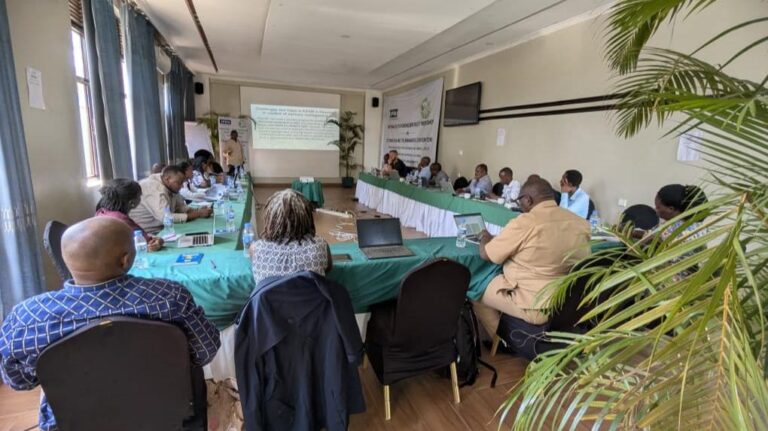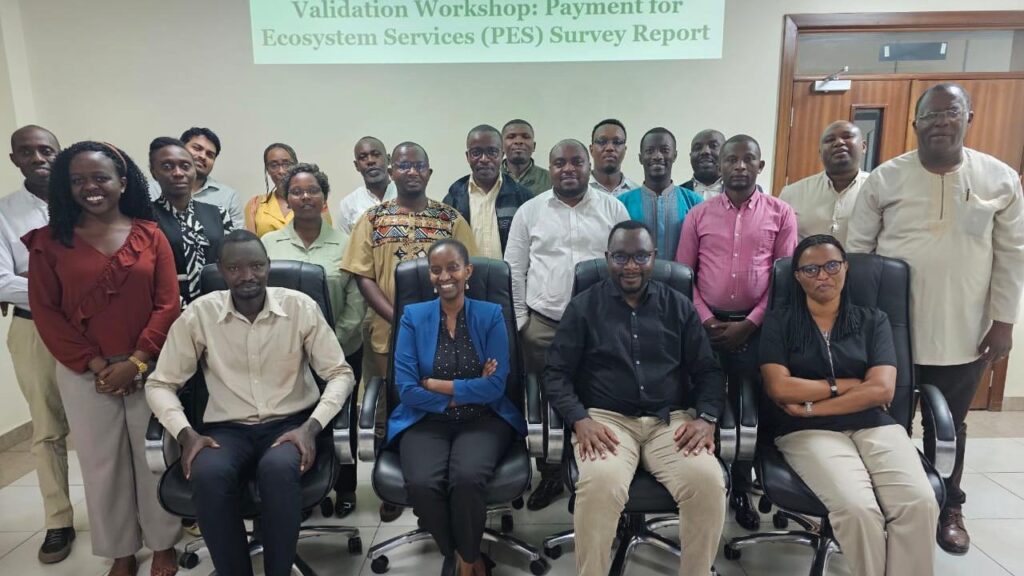
On 24 September 2026, ARECO-RWANDA NZIZA joined a national validation workshop on Payment for Ecosystem Services (PES) held at the Gasabo District Office in Kigali. The organization was represented by Dr. Elie Ntirenganya.
Organized by the Ministry of Environment (MoE) with support from the European Union, the workshop brought together 30 stakeholders from government institutions, civil society organizations, research institutions, conservation organizations, the private sector, and other partners working in biodiversity conservation, ecosystem restoration, natural resource management, and sustainable financing.
The workshop focused on reviewing and validating a draft survey report on the PES framework in Rwanda. Payment for Ecosystem Services is an approach that creates incentives for people and organizations that conserve, restore, and sustainably manage ecosystems. In simple terms, it recognizes the value of the services provided by nature and creates mechanisms through which those who benefit from these services can contribute to their protection.
Discussions highlighted the significant economic and social value of Rwanda’s natural ecosystems. Agriculture, water supply, energy, tourism, biodiversity, and livelihoods all depend on healthy ecosystems. However, increasing pressure on forests, wetlands, soils, and other natural resources is threatening these services and creating a need for innovative and sustainable approaches to conservation financing.
The survey findings presented during the workshop showed that while awareness of the concept of rewarding nature conservation is growing, the term “Payment for Ecosystem Services” remains largely unfamiliar at community level. Participants also noted that many existing initiatives support conservation but do not yet operate under clear PES frameworks. The continued dependence of conservation activities on donor funding was also highlighted as a challenge to long-term sustainability.
Participants identified forests and wetlands as important areas for initial PES interventions and emphasized the potential role of private-sector actors whose activities depend on ecosystem services, including water, energy, mining, and tourism businesses. They also called for stronger coordination between government, communities, civil society, and the private sector, as well as greater awareness of PES among local communities, including through information provided in Kinyarwanda.
A key issue raised during the workshop was the need for a clear legal and institutional framework for PES in Rwanda. Participants also recommended establishing a mechanism to register and track PES initiatives across the country to improve coordination, transparency, and learning.
The workshop further discussed potential pilot landscapes, including Volcano, Sebeya-Giciye, and Gishwati-Mukura. These areas have been identified based on factors such as their vulnerability to climate change, biodiversity significance, importance for water and hydropower resources, tourism potential, economic activities dependent on natural resources, and the vulnerability of local livelihoods.
For farmers, cooperatives, communities, and other actors involved in conservation, PES could create an opportunity to receive financial recognition for activities such as protecting forests and wetlands, restoring degraded land, planting trees, and reducing soil erosion. Such incentives could help recognize the wider benefits that conservation provides to communities, businesses, and the national economy.
The Ministry of Environment is expected to finalize the PES survey report and advance the development of a national framework for implementing PES in Rwanda. The ongoing development of Rwanda’s environmental legal framework also provides an opportunity to strengthen the country’s approach to PES.
Through its participation, ARECO-RWANDA NZIZA reaffirmed its commitment to promoting sustainable environmental management and innovative approaches that recognize the value of nature and the contribution of communities to its protection. The organization will continue engaging with stakeholders to support conservation approaches that benefit both ecosystems and the people who depend on them.