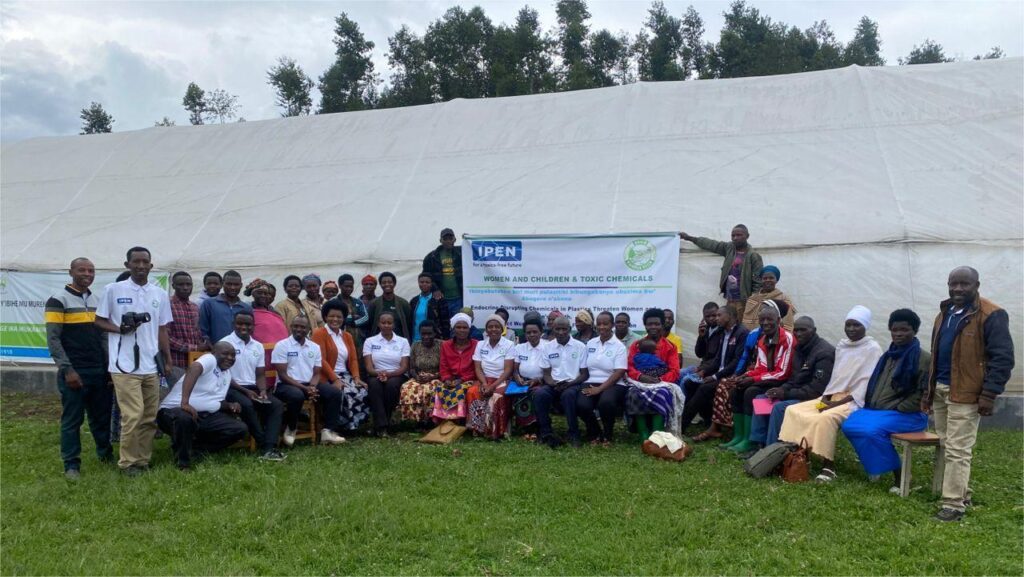
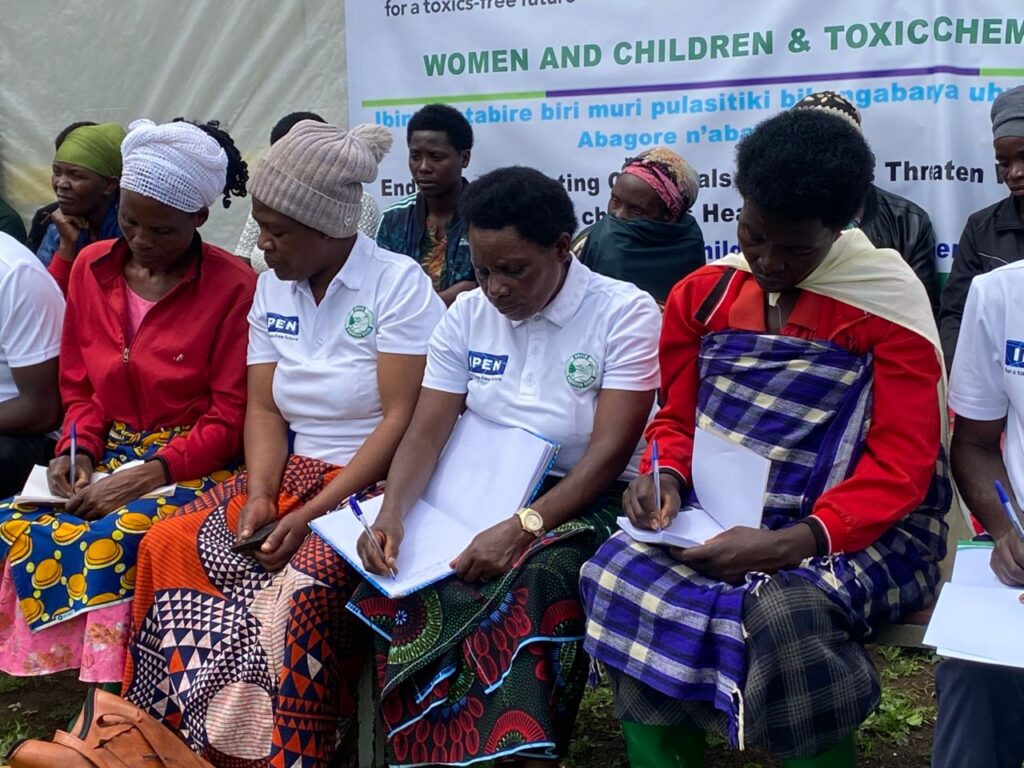
On 17 December 2025, ARECO–RWANDA NZIZA, with the support of the International Pollutants Elimination Network (IPEN), organized a community awareness workshop in Nyabihu District, Mukamira Sector, engaging members of the TUZAMURANE Cooperative. Held under the theme “Endocrine-Disrupting Chemicals (EDCs) in Plastics and Women’s Health,” the workshop addressed a critical yet often overlooked public health issue that disproportionately affects rural communities, particularly women and children.
The workshop was officially opened by Mr. Ndikumana Jean Baptiste, the Mukamira Sector Agronomist, who warmly welcomed participants and underscored the importance of linking environmental protection with community health. He emphasized the need for farmers and households to better understand the health risks associated with chemicals encountered in agriculture and everyday life, before inviting Mr. Vincent Karemera, ARECO’s EDCs Project Manager, to deliver the keynote presentation.
In his presentation, Mr. Karemera highlighted the widespread presence of endocrine-disrupting chemicals in commonly used products such as plastic food containers, household utensils, cosmetics, baby bottles, and agricultural chemical packaging. He explained that substances like phthalates and bisphenols, including BPA, interfere with the body’s hormonal system and are associated with serious health problems, including reproductive disorders, cancers, diabetes, obesity, birth defects, and developmental challenges in children.
He further noted that women are particularly vulnerable due to biological factors such as pregnancy, breastfeeding, and puberty, as well as social factors linked to the frequent use of plastic and cosmetic products. Emphasizing prevention, Mr. Karemera called on participants to adopt safer practices, including avoiding the reuse of pesticide containers, reducing plastic use in food preparation and storage, and advocating for transparency and the Right to Know about chemicals in consumer products.
The presentation was followed by an interactive question-and-answer session, during which TUZAMURANE Cooperative members shared their experiences and raised concerns related to pesticide use, plastic handling, and associated health effects. ARECO representatives addressed misconceptions through simplified explanations and practical examples, enabling participants to clearly understand what EDCs are, where they are found, and how exposure can be reduced both on farms and in households.
The workshop concluded with closing remarks from Ms. Dancilla Mukakamari, the National Coordinator of ARECO–RWANDA NZIZA. She commended participants for their active engagement and strong commitment to environmental protection and community development, and encouraged them—especially women—to act as agents of change by protecting their families, raising awareness in their communities, and advocating for toxic-free products and stronger chemical safety regulations.
Overall, the workshop successfully translated complex scientific evidence from WHO and UNEP into clear, community-friendly messages. It strengthened grassroots awareness on women and chemical safety and reinforced advocacy for safer household practices. Despite initial challenges related to limited knowledge of EDCs at the community level, participatory discussions and real-life examples proved effective in building understanding and confidence among participants.
The TUZAMURANE Cooperative operates in Mukamira Sector of Nyabihu District and is composed predominantly of rural women, who make up about 80% of its membership. The cooperative has benefited from several development initiatives implemented by ARECO–RWANDA NZIZA in collaboration with various partners. The most recent and ongoing initiative is an OIF-funded project on women’s empowerment through greenhouse-based horticulture, which aims to strengthen women’s economic autonomy and improve livelihoods in the community.
ARECO–RWANDA NZIZA plans to expand similar community awareness activities to other agrochemical-intensive regions across the country, continuing its mission to protect women’s health, safeguard future generations, and promote toxics-free communities.